
Four objects. Four moments in which Apple did not simply release a new product — it redefined what a computer can be, where it lives, and how it fits into a human life. Each one made the next one possible. Each one changed a behaviour, not just a market.
This is not a story about specifications. It is a story about an idea that kept evolving — the idea that technology should disappear into life, becoming so natural that you stop noticing it is there.
Before the Macintosh, computers spoke in commands. You typed instructions and waited for responses. The machine dictated the terms of the conversation. The original Macintosh of 1984 — and the Classic that followed — turned that relationship upside down: the computer learned to speak the language of people, not the other way around.
The desktop metaphor, the mouse, the menubar, windows that could be moved and resized — none of these were new inventions. Xerox PARC had developed them in the 1970s. But Apple was the company that packaged them into something a person could actually buy, carry home, and use without reading a manual.
The Macintosh Classic sat on a desk. It was still a room object, anchored to a power socket and a fixed location. But the relationship between human and computer had fundamentally changed. Computing had become personal — in every sense of the word.

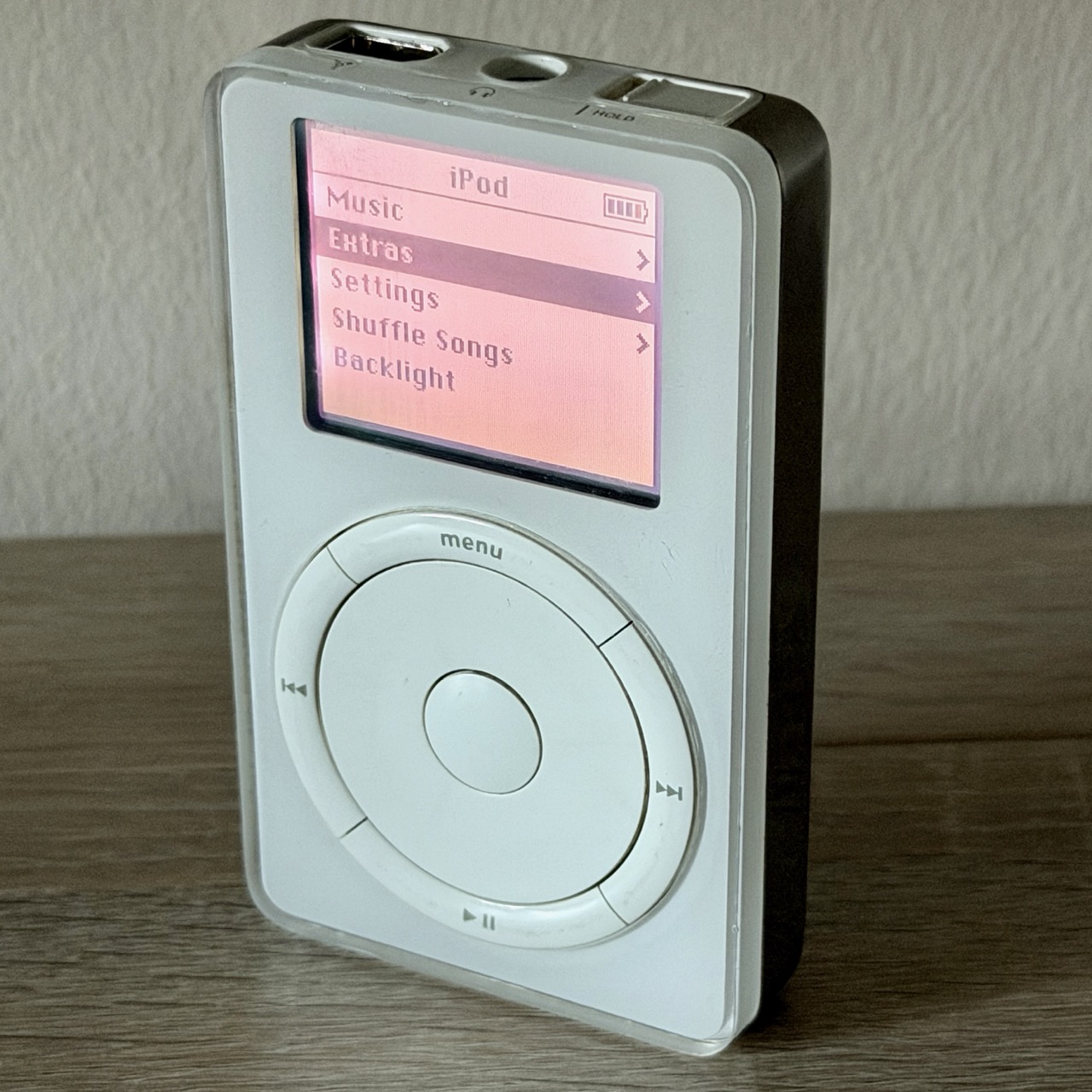
Eleven years after the Classic, Apple did something that seemed modest but was actually radical: it put a computer in your pocket. Not a general-purpose computer — a dedicated one, built for a single task. A thousand songs. A scroll wheel. A battery that lasted all day.
The iPod was the first Apple product you went looking for when you left the house. It was the first device that travelled with you as naturally as keys or a wallet. And in doing so, it proved something that would define the next decade of computing: the most powerful computer is the one you always have with you.
It was also proof that subtraction could be a design philosophy. No keyboard. No screen capable of browsing the web. No expandable storage. Every constraint was a feature — because every constraint made the device simpler, lighter, more focused, and easier to love.
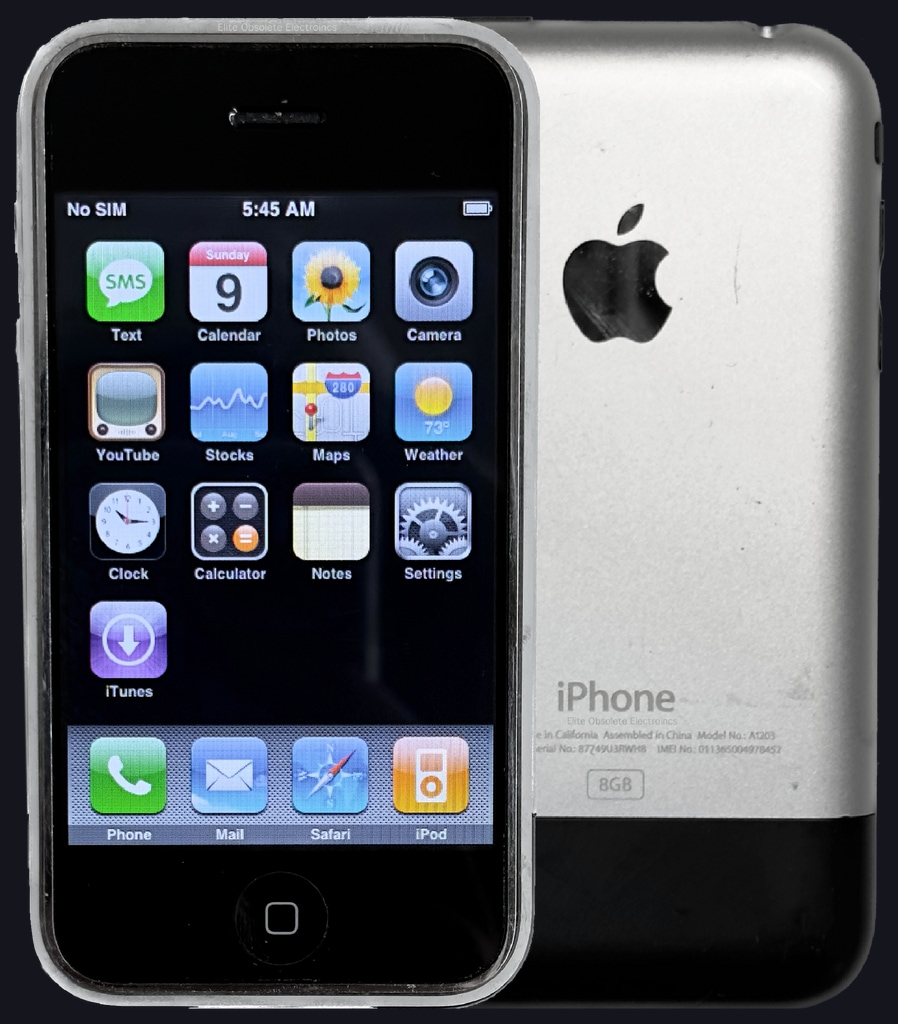
On January 9, 2007, Steve Jobs stood on a stage in San Francisco and said Apple was introducing three revolutionary products: a widescreen iPod with touch controls, a revolutionary mobile phone, and a breakthrough internet communicator. The crowd applauded three times. Then he said it was all one device.
The iPhone did not invent the smartphone. BlackBerry and Nokia were already there. What it did was make the smartphone understandable — an object so intuitive that the instruction manual was a single page. A screen you touched directly, without a stylus. A web browser that showed real websites, not mobile approximations. A device that was genuinely pleasant to use.
Within five years, every phone manufacturer that had dominated the market before 2007 was in crisis or irrelevant. The iPhone did not just win a product category. It eliminated several and created others. And it established a new truth: the computer in your pocket was now permanently, always, connected to everything.
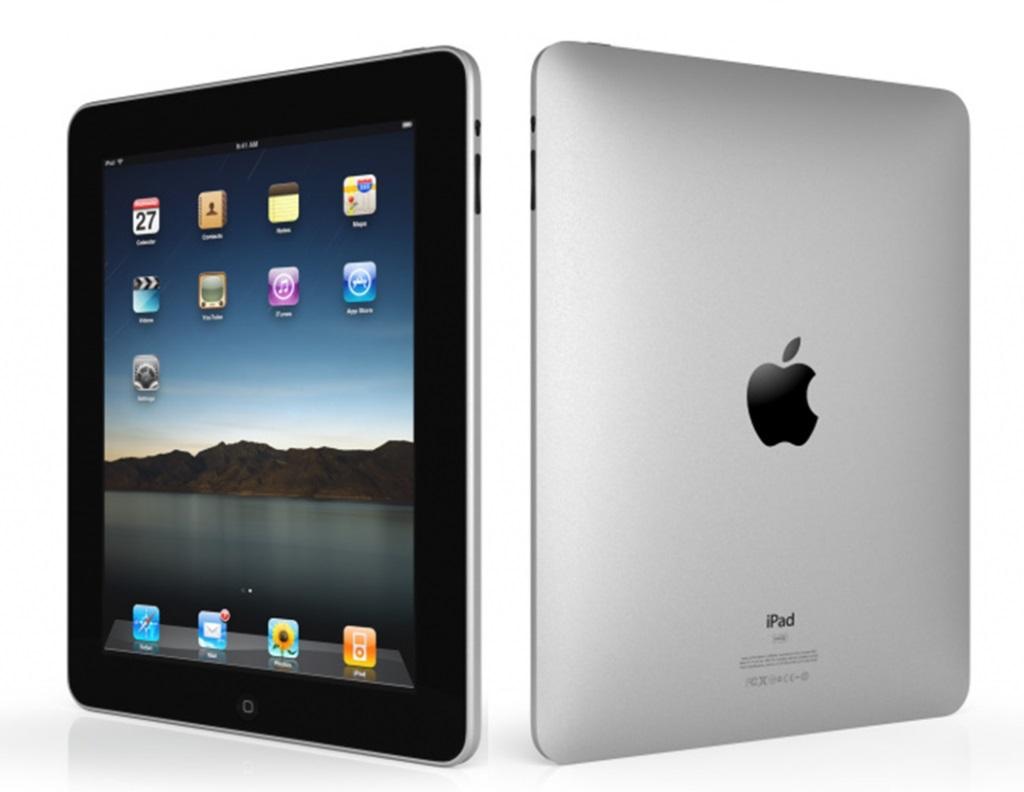
When the iPad was announced in January 2010, the reaction was sceptical. It was dismissed as a big iPhone. Critics pointed out what it lacked: no camera, no USB port, no multitasking, no Flash. A product in search of a purpose.
Then people touched it. And something shifted.
The iPad was the purest expression of Jobs' vision of computing: a screen and nothing else. No keyboard, no mouse, no file system to navigate. You reached out and touched the content directly — a page turned like a real page, a photo spread between your fingers, a piano played by touching keys on glass. The interface had become invisible.
It was also, paradoxically, the most inclusive computer Apple had ever made. People who had spent decades being intimidated by computers — who had never learned to type, who found file systems baffling, who were put off by the complexity of a desktop — picked up an iPad and were immediately at home. The computer had finally learned to disappear into the task, leaving only the task itself.
Twenty years after the Macintosh Classic sat on a desk and asked you to come to it, the iPad lay in your lap and waited. The evolution was complete — not because computing had reached its destination, but because it had finally become natural.
| Object | Where you use it | What changes | What disappears |
|---|---|---|---|
| Macintosh Classic · 1990 | On a desk, in a fixed room | The computer speaks human — GUI replaces command line | The need to learn a programming language |
| iPod 1st gen · 2001 | In your pocket, everywhere | Computing leaves the room — it travels with you | The CD collection, the hi-fi system |
| iPhone 2G · 2007 | In your hand, always on | The computer merges with daily life — always connected | The map, the camera, the address book, the alarm clock |
| iPad 1st gen · 2010 | In your lap, anywhere | The interface disappears — only the content remains | The keyboard, the mouse, the file system, the manual |

None of this was inevitable. Behind every one of these four objects was a single driving force: Steve Jobs — his vision, his love for products, his obsession with perfection. An obsession that was partly inherited from his father, who taught him to care about the back of a cabinet that no one would ever see. Because the craftsman knows. And that knowledge changes the object.
Jobs never put shareholders first. For him, the performance of Apple's stock was a consequence, never a goal. What he was trying to do was something else entirely — to leave a dent in the universe, to give something back to this remarkable world by doing what he did best: pushing the limits of what we believe is possible, to build something beautiful, something we want to use. All of us.
His keynotes were unlike anything else in the industry — and not by accident. Jobs was always the first person on stage who was genuinely playing with his own products, waiting to see our reaction at first contact. He wasn't performing excitement. He already knew what it felt like to hold something that worked exactly as it should. He just wanted to share the moment when we discovered it too.
"The people who are crazy enough to think they can change the world
are the ones who do."
— Steve Jobs