Apple · 2001
PowerBook G4 Titanium
PowerPC G4 · 1 GHz · The world's thinnest laptop
CPU
PowerPC G4 · 1 GHz
RAM
256 MB – 1 GB
Display
15.2" · 1152×768
Shell
Titanium
Weight
2.4 kg
Year
2001
PowerPC G4 · 1 GHz · The world's thinnest laptop
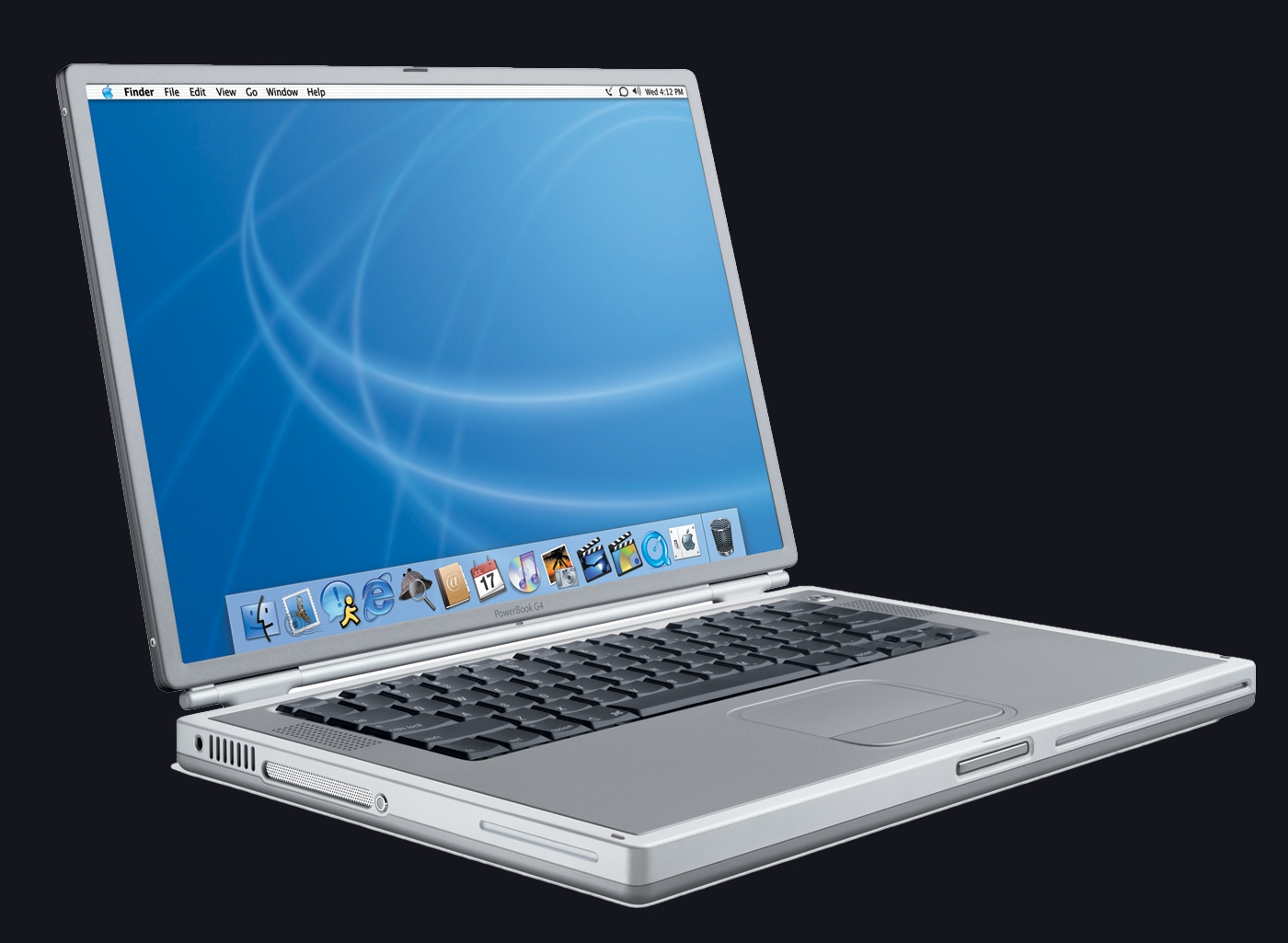
Steve Jobs unveiled the PowerBook G4 Titanium at Macworld January 2001. It was sitting on a stand at centre stage, covered by a veil, and when Jobs lifted it and the audience saw those proportions for the first time, the room went quiet before erupting. No laptop had ever looked like that: a titanium shell just 1 inch thin, a 15.2" widescreen display, and a weight made possible only by the metal body.
Jobs summarised the machine with two words that became instantly famous: "Power + Sex" meaning raw performance and physical desirability in equal measure. It captured perfectly what the TiBook was: the first laptop that made people want it before they even knew what it could do.
It was also the year of OS X 10.0, of the dot-com crash, and of Apple redefining what it meant to carry a professional computer.
The PowerBook G4 Titanium wasn’t simply a faster PowerBook. It changed what a professional laptop could look like.
At just one inch thick, with a 15.2-inch widescreen display and a PowerPC G4 processor, it combined three qualities that had rarely existed together: thinness, screen real estate and serious computing power.
The titanium enclosure made the machine feel less like a piece of office equipment and more like a precision instrument. Its proportions, wide display and minimal exterior helped establish a new visual language for portable computers.
The machines that followed would make this philosophy lighter, thinner and eventually more compact. But the idea was already there.
The MacBook Air would later make the laptop disappear into an envelope. The PowerBook G4 first made the laptop itself desirable.
The titanium PowerBook looked almost indestructible. Its dark metallic finish, clean lines and incredibly thin profile made it feel more like a piece of precision equipment than a conventional laptop.
But the finish had a weakness. The titanium shell was covered with a paint-like coating that could chip and peel with use, particularly around the edges and corners. For a machine that looked so advanced and carefully engineered, seeing the finish deteriorate was surprisingly disappointing.
Apple eventually moved away from titanium and adopted aluminium for the next-generation PowerBook G4. The material was more practical, easier to work with and would eventually become one of the defining materials of the modern Mac.
In retrospect, the Titanium PowerBook feels like a beautiful experiment: the material wasn’t quite right, but the idea was.
And that idea — a powerful computer reduced to an elegant, thin slab of metal — would survive long after the titanium was gone.
Finally the Middle Ages are over — also for me 😃
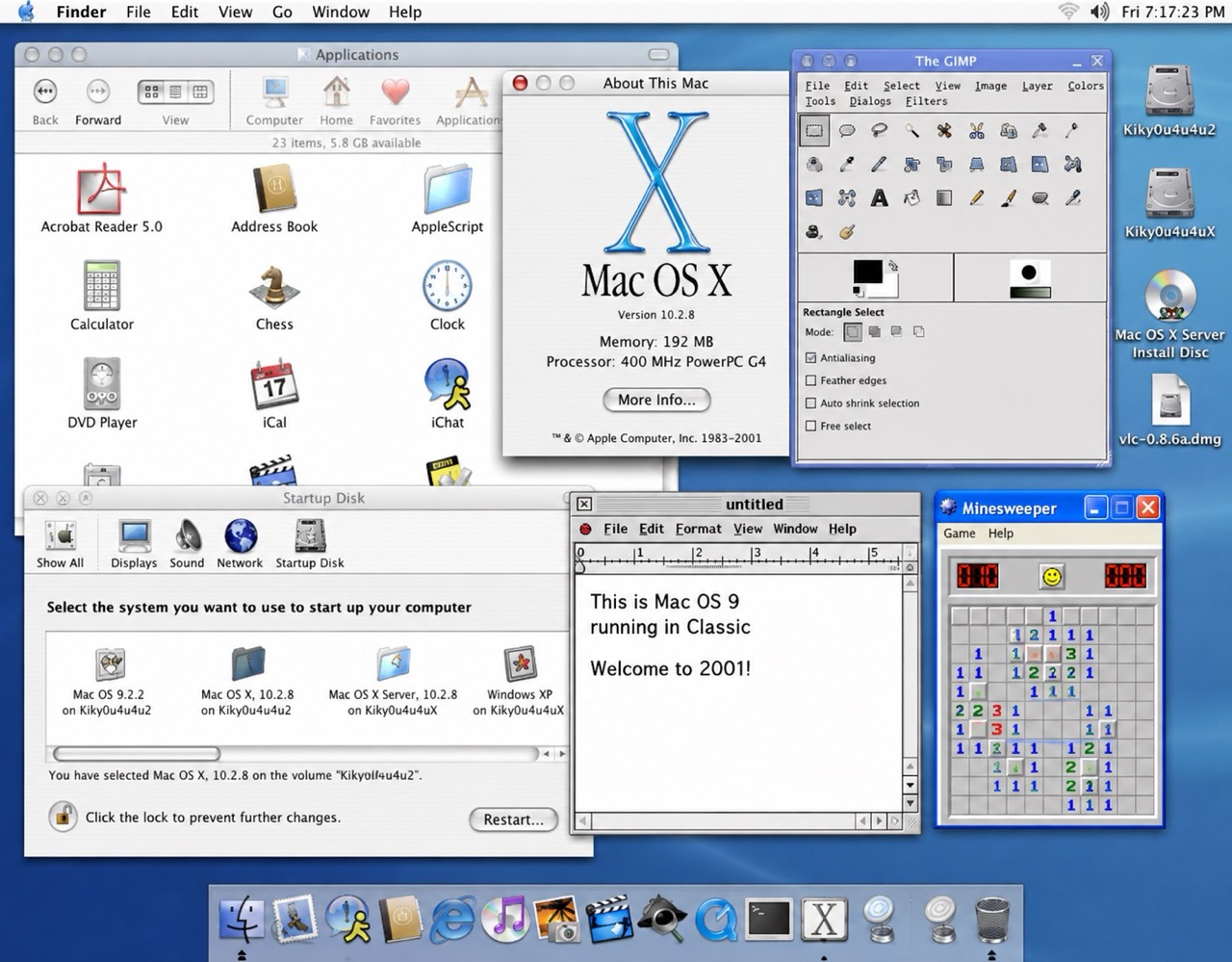
My first Mac, and what a fantastic machine! The design seemed to have come from the future (especially compared to the notebooks from the dark side). The elegance and the simplicity of Mac OS X 10.2 Jaguar was amazing.
I remember I couldn't believe my own eyes when I could open OS X applications, Mac OS 9 applications (with the Classic environment) and Linux applications like GIMP thanks to the X Window System. Three different worlds running together, smoothly, on the same powerhouse… woooow! 🤯