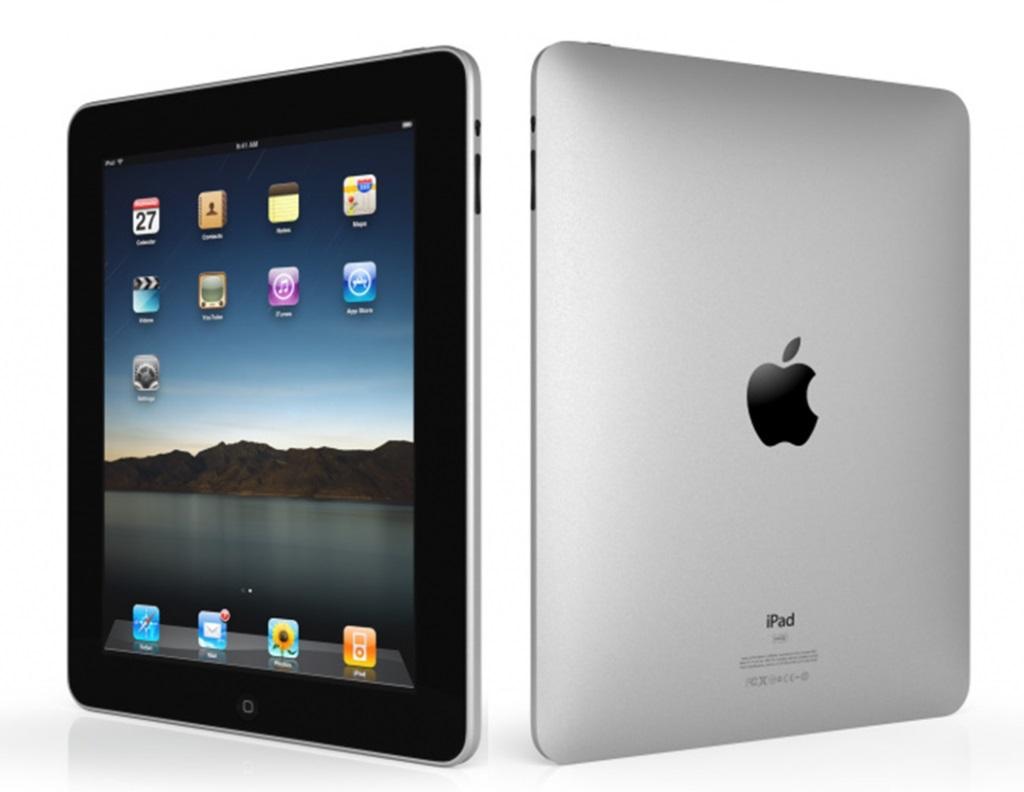
Apple · 2010
iPad
1st generation · The device that defined the post-PC era
CPU
Apple A4 · 1 GHz
RAM
256 MB
Display
9.7" IPS · 1024×768
Storage
16 / 32 / 64 GB
Year
April 2010
Launch price
$499
1st generation · The device that defined the post-PC era
On January 27, 2010, Steve Jobs walked onto the stage at the Yerba Buena Center in San Francisco, sat down in an armchair, and introduced a device that most of the industry had already dismissed before it launched. Pundits had spent weeks mocking the iPad as "just a big iPhone." They were spectacularly wrong.
The iPad arrived at a precise cultural moment: the smartphone had already changed how people related to computing, but the laptop still demanded a desk, a posture, and an intention. The iPad proposed something different — a computer you could hold like a magazine, use on a sofa, pass to a child, or carry without a bag. It was the first device that felt native to casual, intimate computing.
Jobs called it the most important thing he had ever done. At the time, many laughed. Within a year, every major manufacturer had an iPad competitor. Within two years, it had created an entirely new product category that hadn't existed before.
The iPad 1st generation was built around the Apple A4 — the first chip Apple designed entirely in-house, combining ARM CPU and PowerVR GPU on a single die. It was a declaration of independence from Intel and Qualcomm alike, and the beginning of Apple's chip design journey that would ultimately produce Apple Silicon.
But beyond the hardware, the iPad proved something philosophical: that most people, most of the time, did not need a general-purpose computer. They needed a device that was fast, immediate, and invisible — one that got out of the way and let them read, watch, communicate, and create. The iPad delivered exactly that, and the market confirmed it with ten million units sold in the first year.
It also redefined several industries overnight: newspapers, magazines, books, education, and medicine all found in the iPad a platform that fit their workflows in ways the laptop never had. The cockpit of an Airbus A320 replaced its paper manuals with iPads in 2011. Doctors began carrying patient records on them the same year. The consumer product became a professional tool faster than almost anything before it.
During the January 2010 keynote, Jobs demonstrated the iPad by sitting in a leather armchair on stage — a deliberately casual pose designed to show that this was not a device you used at a desk. He browsed the web, read a book, watched a video. The entire demonstration was performed sitting down, which had never happened at an Apple keynote before. It was a piece of theatre as carefully designed as the product itself: Jobs was showing, not just telling, what kind of computing the iPad represented. The armchair became almost as famous as the device.
My first iPad was the iPad 2, the first one to arrive in Italy. It is incredible how much it changed my approach to technology: since then, my only laptop has been the one I use at the office. On my desk I have an iMac and an iPad Pro M1. When I travel, the iPad becomes the perfect companion to my iPhone — always ready for everything.